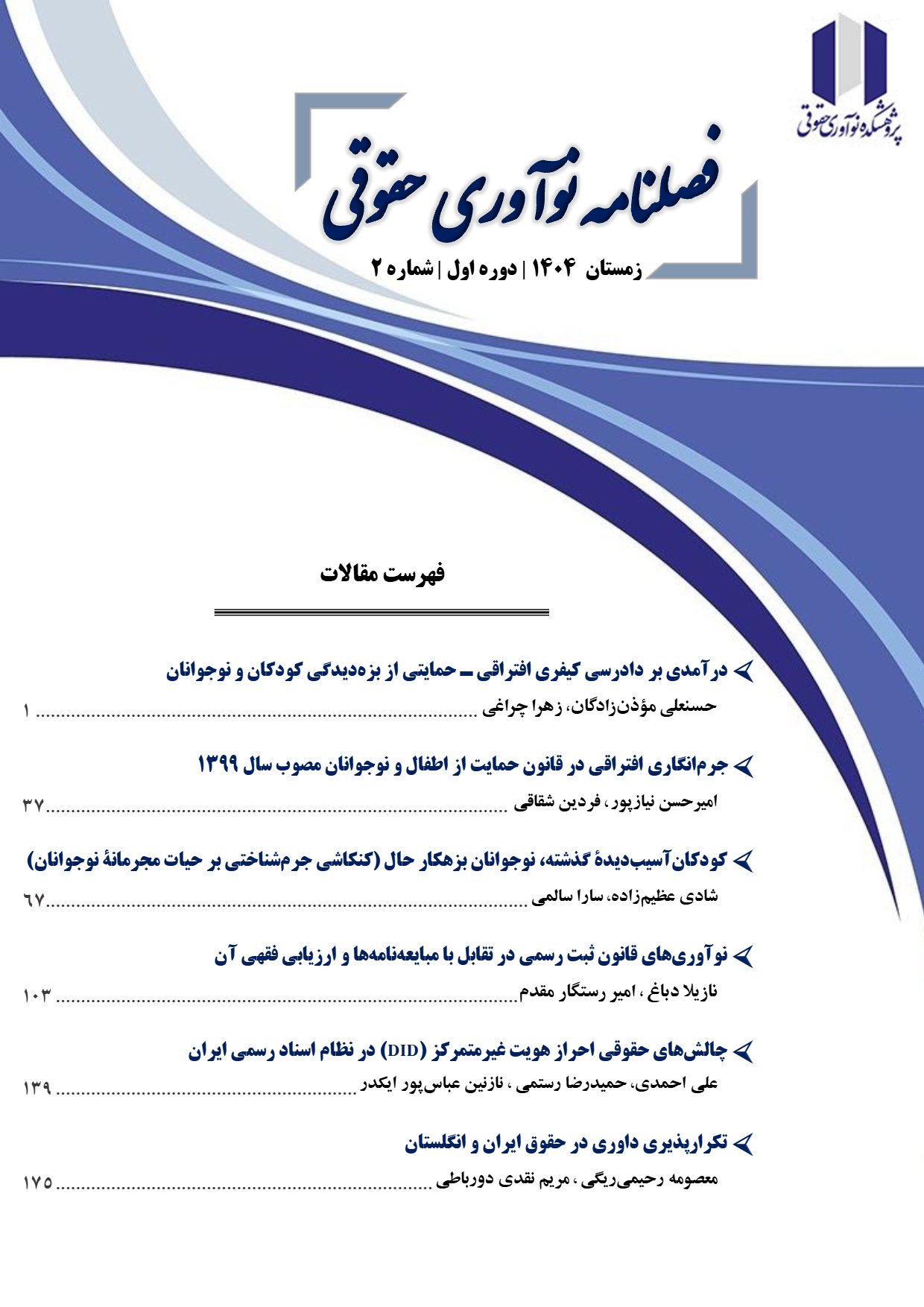
نوع مقاله : مقاله پژوهشی
عنوان مقاله English
نویسندگان English
Children and adolescents constitute one of the most vulnerable groups within every legal system due to their physical, psychological, emotional, and developmental characteristics. Because of their dependence on adults and their limited capacity to protect their own rights, they require legal procedures specifically adapted to their age, maturity, and best interests. Contemporary child justice has therefore moved beyond formal equality toward differentiated and child-friendly justice, recognizing that children involved in criminal proceedings—particularly as victims—require procedural safeguards that differ substantially from those afforded to adults. International standards consistently emphasize that justice systems should be accessible, age-appropriate, multidisciplinary, and designed to minimize secondary victimization. Within the international legal framework, the Convention on the Rights of the Child (CRC) establishes the child's best interests as a primary consideration in all actions affecting children and requires States to promote the physical and psychological recovery and social reintegration of child victims. Likewise, contemporary child-friendly justice standards emphasize specialized institutions, child-sensitive procedures, privacy protection, effective participation, and multidisciplinary cooperation throughout judicial proceedings. Iran has taken an important legislative step through the enactment of the Law on the Protection of Children and Adolescents (2020), which introduced comprehensive statutory protections and established institutional mechanisms aimed at preventing child victimization. Nevertheless, important challenges remain regarding implementation, institutional capacity, and the effective operation of a differentiated criminal justice system for child victims. Against this background, the present study examines the conceptual foundations, legal sources, institutional structure, and practical operation of differentiated and supportive criminal proceedings for child and adolescent victims within the Iranian legal system. It further evaluates the extent to which existing legislation conforms to contemporary international standards and identifies the principal obstacles to effective implementation.
Methodology
This research adopts a descriptive–analytical doctrinal methodology based primarily on documentary and library research. The analysis examines Iranian legislation governing child protection, including the Law on the Protection of Children and Adolescents (2020) and the Criminal Procedure Code, together with relevant international instruments, particularly the Convention on the Rights of the Child and internationally recognized child-friendly justice standards. The study is organized around three analytical dimensions:
1. the conceptual foundations of differentiated and supportive criminal proceedings;
2. the domestic and international legal sources establishing this framework;
3. the institutional mechanisms responsible for implementing child-sensitive criminal justice.
Findings
The analysis demonstrates that differentiated and supportive criminal proceedings constitute an essential component of modern child justice systems. Unlike conventional criminal procedures, child-sensitive justice seeks to balance procedural fairness with the child's developmental needs by minimizing secondary victimization while ensuring effective access to justice. The legal analysis indicates that Iran has established an increasingly comprehensive legislative framework for protecting child victims. The Law on the Protection of Children and Adolescents (2020), together with relevant provisions of the Criminal Procedure Code, provides an important statutory basis for specialized criminal proceedings involving children. The study further identifies several institutional mechanisms intended to implement differentiated justice, including specialized child protection police units, specialized prosecution offices, dedicated juvenile courts, and child protection agencies. These institutions collectively provide the organizational foundation for implementing protective criminal justice measures. Despite these legislative developments, several practical challenges continue to undermine effective implementation. First, enforcement mechanisms remain insufficiently developed, limiting the practical realization of statutory protections. Second, specialized institutions responsible for child protection remain limited in both institutional capacity and geographical accessibility.
Third, professionals involved in child protection—including police officers, prosecutors, judges, social workers, and forensic specialists—often lack specialized training concerning child development, trauma-informed interviewing, and child-sensitive judicial procedures. International standards consistently identify professional training as a prerequisite for effective child-friendly justice. Finally, coordination among judicial authorities, child protection agencies, welfare organizations, educational institutions, and healthcare providers remains fragmented, reducing the effectiveness of multidisciplinary interventions. Overall, the findings suggest that legislative reform alone is insufficient unless accompanied by institutional strengthening, professional specialization, and integrated implementation mechanisms.
Conclusion and Recommendations
The study concludes that differentiated and supportive criminal proceedings represent an indispensable element of an effective child justice system. While Iran has made significant legislative progress through the enactment of the Law on the Protection of Children and Adolescents (2020), the practical realization of child-sensitive justice remains constrained by institutional, procedural, and operational deficiencies. International child-friendly justice standards emphasize that child victims should encounter justice systems that are accessible, age-appropriate, multidisciplinary, respectful of children's dignity, and designed to avoid secondary victimization throughout judicial proceedings. Accordingly, several policy recommendations are proposed. First, specialized child protection institutions should be expanded and adequately resourced to provide comprehensive legal, psychological, and social support throughout criminal proceedings. Second, mandatory specialized training should be provided for judges, prosecutors, police officers, social workers, forensic experts, and other professionals working with child victims. Third, institutional coordination should be strengthened through multidisciplinary child protection mechanisms integrating judicial authorities, welfare organizations, healthcare providers, educational institutions, and law-enforcement agencies. Fourth, implementation mechanisms should be reinforced through continuous monitoring, institutional evaluation, and accountability measures to ensure that statutory guarantees are effectively translated into practice. Ultimately, protecting child and adolescent victims requires more than legislative recognition of children's rights. Effective child justice depends upon an integrated system combining specialized institutions, trained professionals, coordinated implementation, and child-centered procedures capable of safeguarding children's dignity, promoting recovery, and ensuring meaningful access to justice.
کلیدواژهها English